
Scraping Wood Dust
Better than sanding
Often I need a bit of special "sawdust." You know, a particular kind of wood dust to use with some cyanoacrylate or other glue for filling inlay gaps or a damage spot.
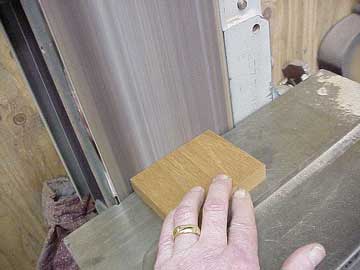
I could take the desired kind of wood over to meet Mr. Beltsander.
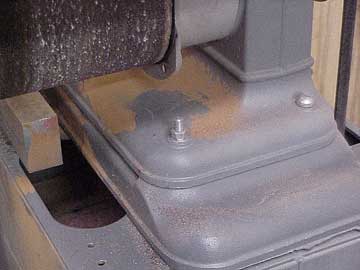
And take my chances picking up the dust from underneath.
Naturally, I'd have to clean up the area first, and most of the dust would become airborne. If I have a coarse belt, then the dust will be coarse - sometimes more coarse than I'd like. I could sand the wood by hand, but that can be a bit messy. Either way, I'll have a bit of abrasive mixed in with the dust.
Here's a little trick I use to get very regular, fine, uncontaminated dust when I need it.
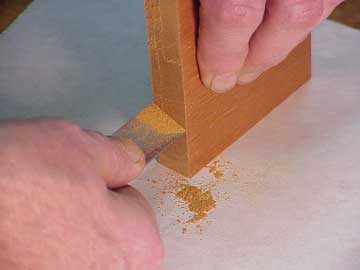
I simply take a sharp chisel and scrape the end grain of the desired piece of wood.
I work on a sheet of paper to catch the dust.
It's not obvious in this photo, but I'm actually pulling upward with the chisel to get a stronger stroke. Because I'm scraping end grain, my dust is very fine and regular, and there's no contamination.