
Restringing an Archtop Jazz Guitar
Restringing an Archtop Jazz Guitar
The archtop guitar is a pretty straightforward beast when it comes to string installation. All archtops have tailpieces, to which strings are usually easily and efficiently attached.
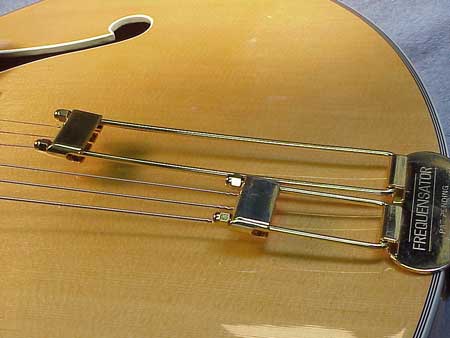
Most traditional tailpieces are metal affairs that float over the face of the guitar:
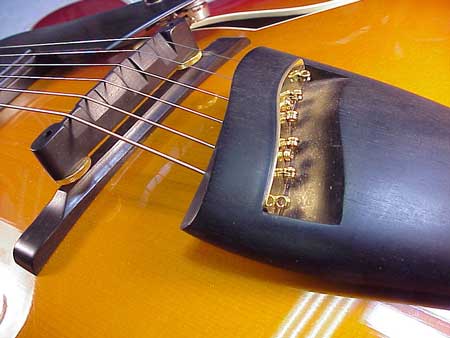
Many modern acoustic archtop builders use a wooden tailpiece, more akin to that found on a 'cello:
Here, the strings simply thread through from the back side.
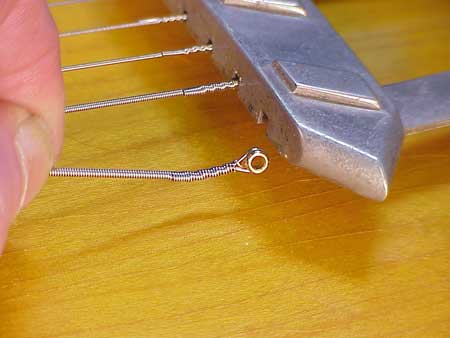
Whatever the style of tailpiece, the strings usually hook or thread on in a very simple fashion. Here, I can hook the string on from underneath. I just make a very slight bend at the end to make it easier to slip it into its notch:
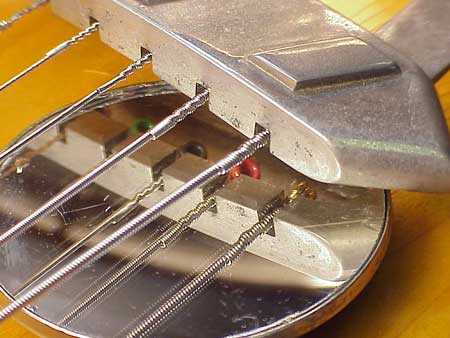
Here, you can see it from the bottom, reflected in my little mirror:
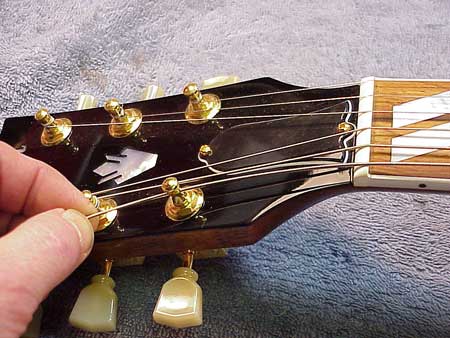
Bringing the string up over the bridge to the peghead, I thread it through the hole in the tuner:
I'm holding the string tight, about 1-1/4" past the the tuning post.
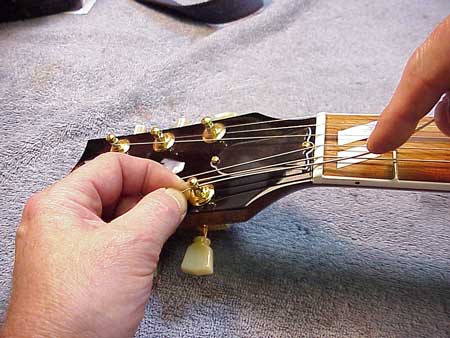
With my right hand, I'll pull the string back while keeping light tension on it to avoid having the string fall out of the tailpiece or out of its position on the bridge:
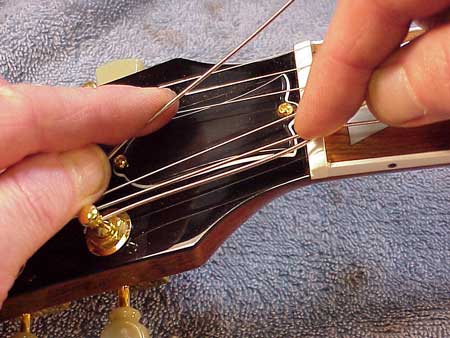
Bending the free end of the string back downward:
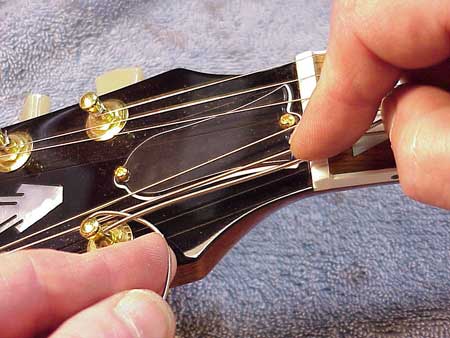
and under, I still keep the tension with my right hand:
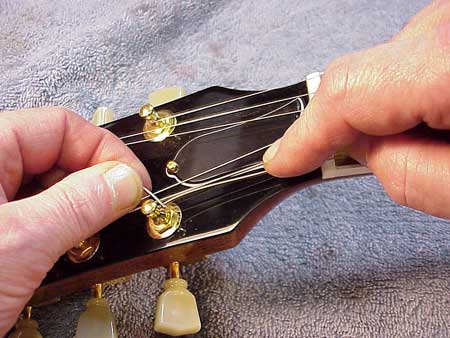
Bringing the string back around itself, I fold it over to lock it in place"
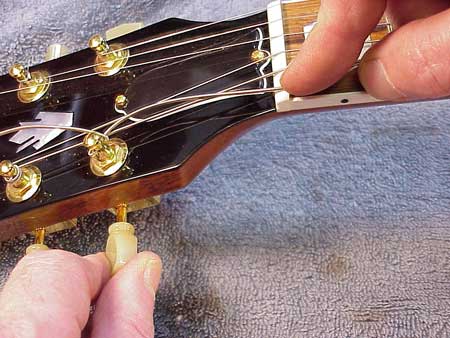
Now, as I start to wind it up, the string pins the free end against the tuner post:
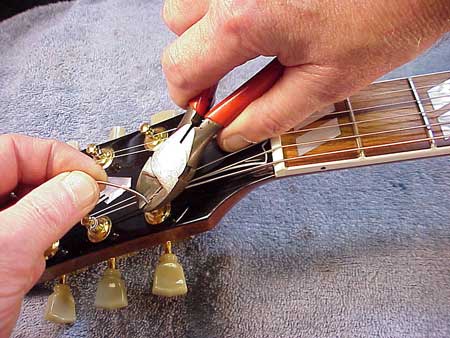
Once it's up to tension, I can cut the excess off, right against the tuner:
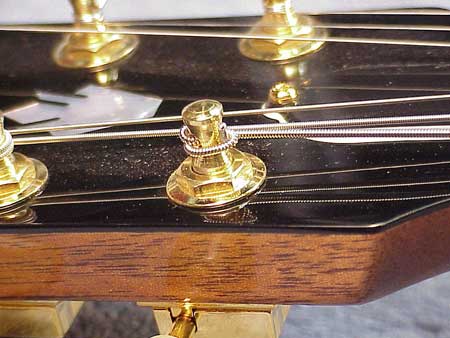
The result is neat and trim, and best of all, it's positively not going to slip:
It's usually easiest to change the strings one at a time, so the bridge will stay in position on the top of the guitar. There's no harm in taking them all off at once, and I like to do that from time to time so I can give the fingerboard and top a good cleaning.
Either way, it's necessary to check the bridge position to assure the best intonation.
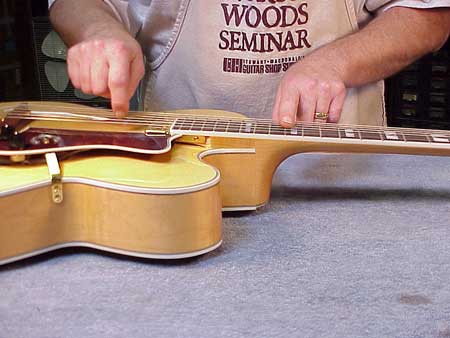
I'll play the harmonic over the twelfth fret and compare it to the fretted note at the twelfth:
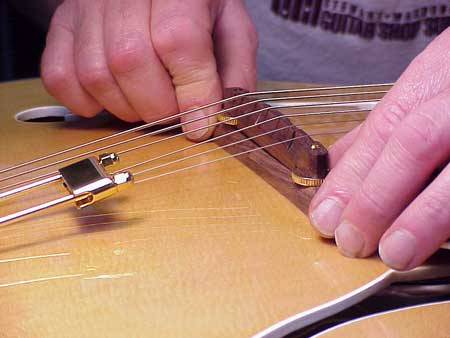
If the fretted note is sharp in comparison, I'll move the bridge toward the tailpiece to lengthen the vibrating string. If the fretted note appears flat, I'll move the bridge toward the neck to shorten the effective string length:
Repeating the process with the other strings, I'll find the best compromise location for the bridge.