
C.Fox Guitars
Healdsburg, CA C.Fox Guitars
Update 2001: Unfortunately, the corporate owners of the C.Fox guitar factory decided to discontinue operation, and the factory was closed immediately. Charles Fox has retained the space and tools, and will be making guitars as an individual luthier, in addition to reopening the American School of Lutherie. You can visit his web site: AmericanSchoolOfLutherie.com Charles has graciously allowed me to keep this article on FRETS.COM. After all, the tips, tools and tricks are still valuable to luthiers!
My repair class at the American School of Lutherie took a midday break and walked around the corner to visit C.Fox guitars. Charles Fox was out of town that day, but his cohort, Jon Lee, was able to take some time to give us a detailed tour. He invited us to photograph and ask any questions we had about their materials, methods and sources. Both he and Charles are justly proud of their company and its work. He told us their policy is to share all their "secrets" and discoveries.
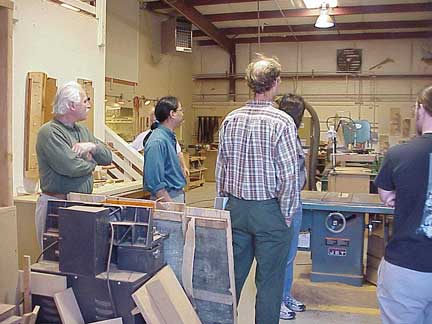
I am, as usual, "designated camera guy" so I don't appear in the pictures:
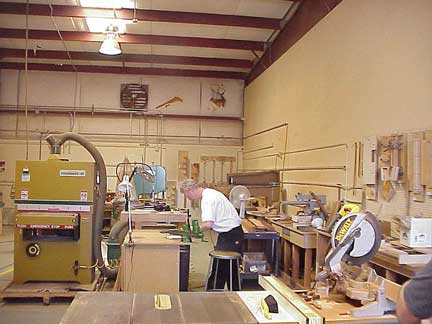
Their work spaces are large and well lighted with lots of space around the tools:
Jon said OSHA had something to do with the layout, but they're very pleased with their facility.
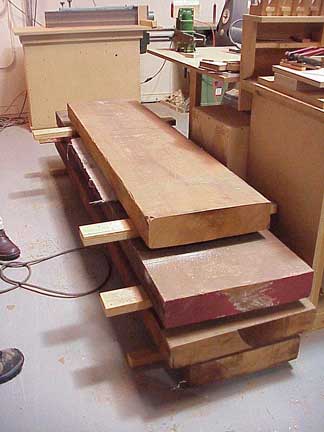
How about these chunks of genuine mahogany? Soon they'll be necks for C.Fox guitars:
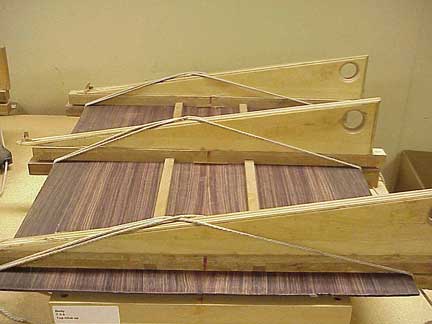
Jon says they use modern manufacturing methods, but try not to lose sight of traditional techniques:
Here, backs are clamped with ropes and wedges. An ancient method, but so fast and effective that it fits their style.
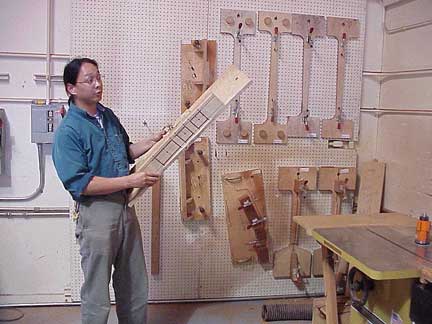
Jon showed us a whole bunch of special shaper templates and fixtures:
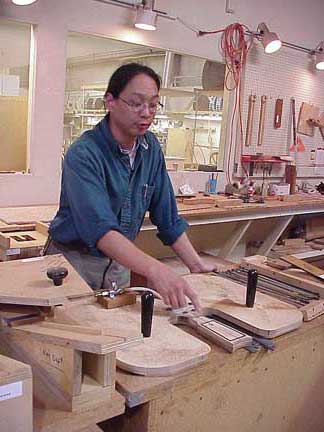
This one is for shaping the distinctive C.Fox peghead:
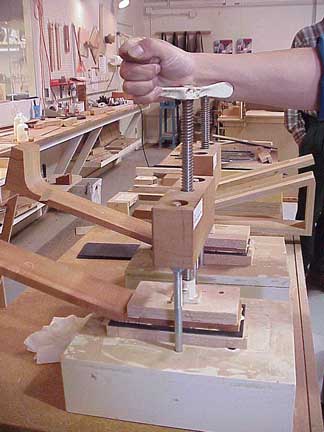
A simple screw press is all that's needed to glue and clamp peghead veneers:
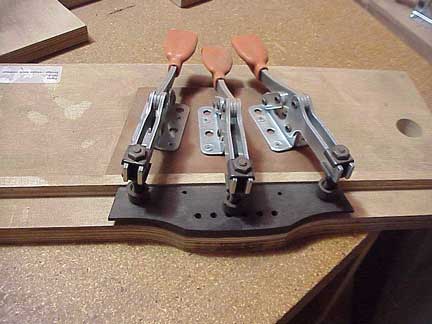
Here's a bridge on its shaper template ready for contouring:
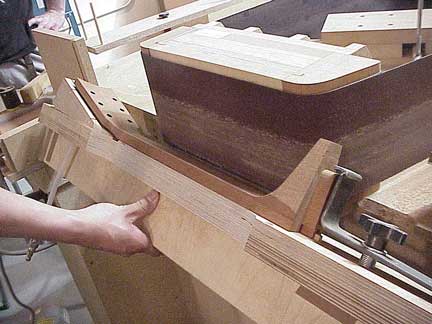
Just check this out! This is a shop-built belt sander with a "dead head," a fixed platen over which the belt slides:
There's a special swinging fixture to hold the neck blank which rotates against the moving belt to produce a finish sanded final neck contour.
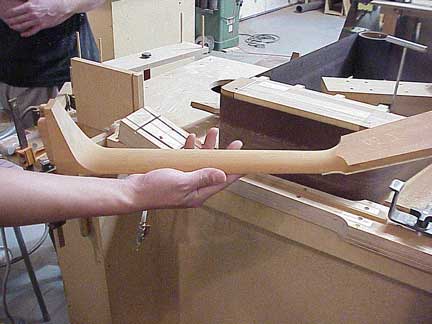
See?
That's one fine neck shaper!
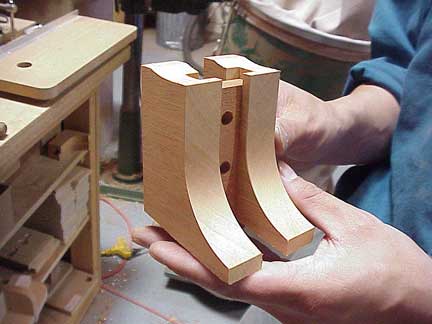
Inside the guitar, the neck block is specially designed and assembled from three precisely shaped parts:
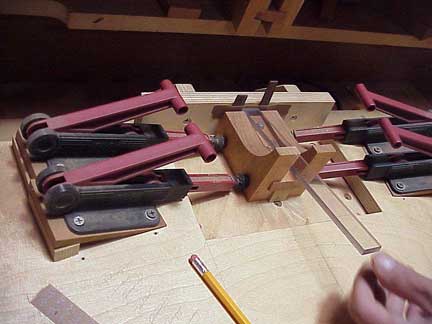
This torture device holds the three pieces in precise alignment as they're glued:
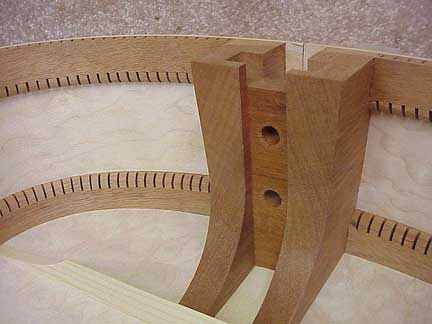
The lower section curves and extends out all the way to the first back brace for extra neck angle stabilization:
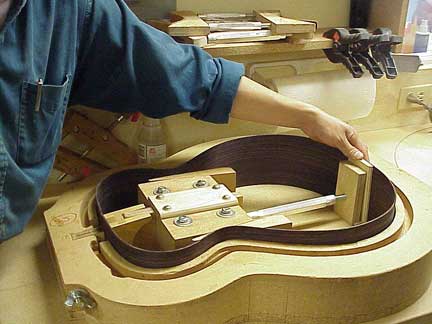
Precise alignment of parts is evident in each of the assembly operations:
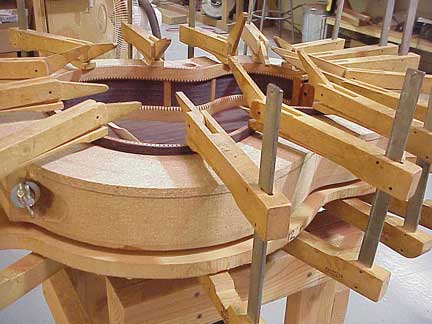
The back is glued first to facilitate cleanup of any small bits of glue:
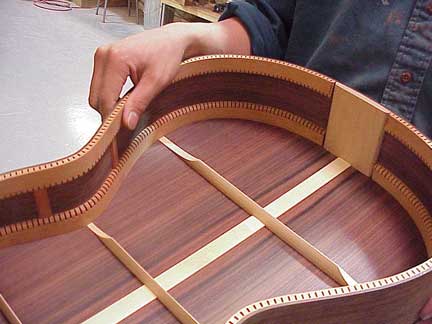
Charles insists on absolutely clean workmanship, even inside the body:
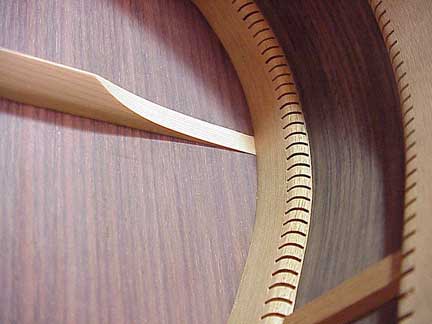
Look closely at the linings:
They're a two-part design, with solid reinforcement along the full interior face of the kerfing. This reinforcement gives the sides incredible rigidity, and "isolates" the vibrations of the top and back, says Jon.
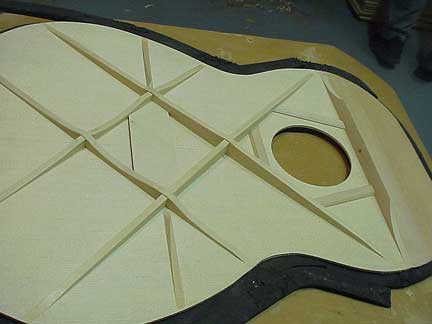
The top bracing is a unique design:
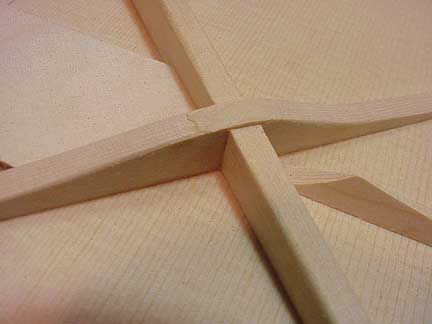
Each intersection is reinforced at the joint:
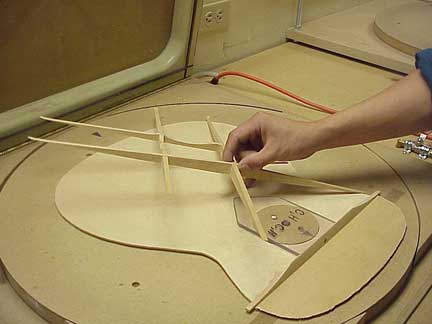
The "double X" braces are made up in a special form, and are very easy to align in the special clamping press:
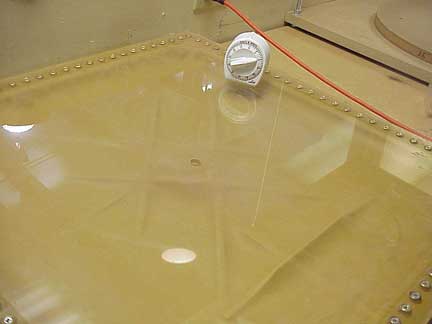
It's a vacuum press, so atmospheric air pressure delivers precise distribution of clamping force:
See how the braces stand out as the rubber sheet pulls down when air is removed from the press.
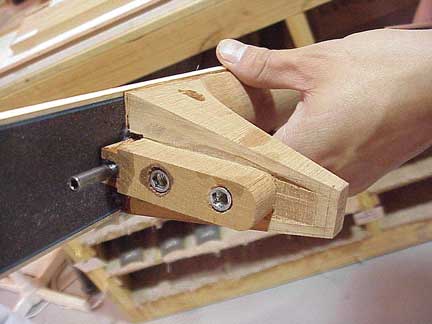
These days, we're all concerned with the eventual need for neck resetting on acoustic guitars. C.Fox guitars have a bolt-on mortise neck joint to facilitate removal while maintaining strong neck to body integrity:
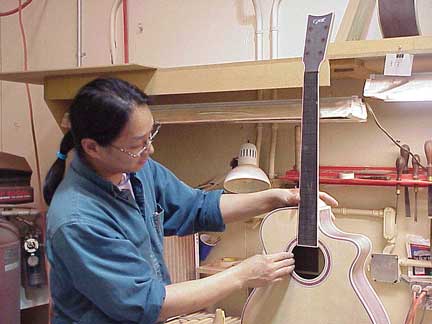
Jon fits up a neck for us:
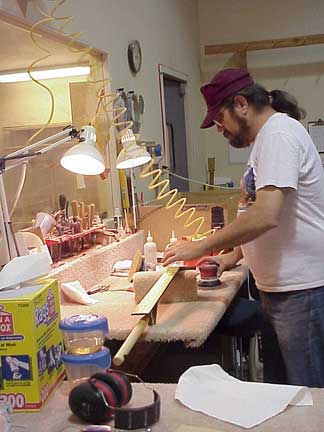
Here's our old friend, Fred Campbell:
He's the man responsible for appling the flawless nitrocelluose lacquer finish on all the C.Fox guitars.
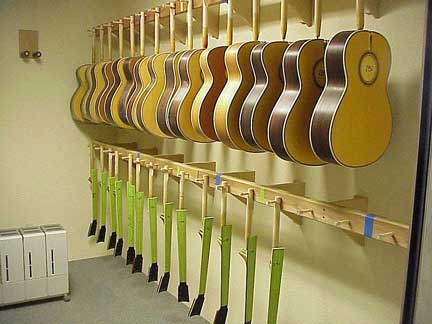
Speaking of which, here's a bunch of them drying in a special climate controlled room:
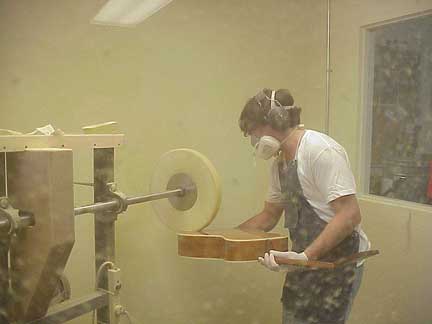
Another glass enclosed room houses the buffing operation:
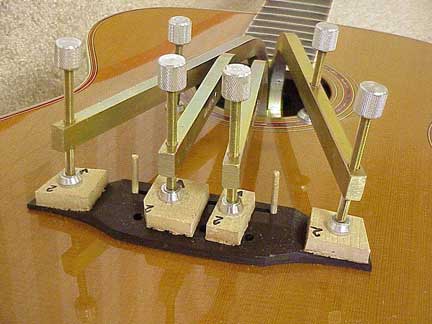
The bridge is the last part to be glued on:
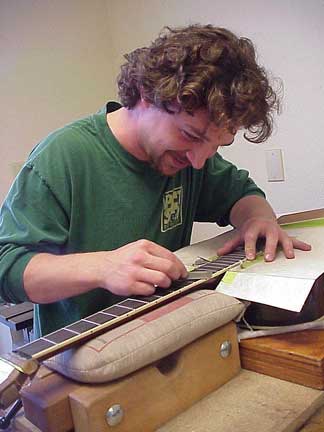
Final assembly and setup is the fun part:
After all, the next operation is to play it!