
Long Reach Tools
It's hard to reach way down in there
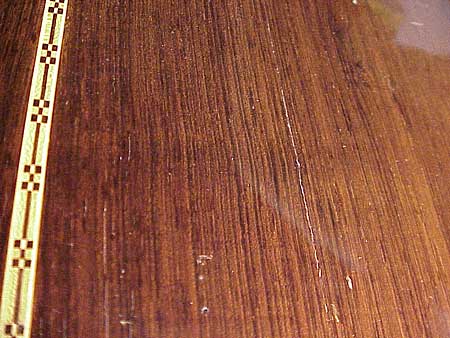
This 1966 Martin D-28 has the tightest crack in its back, way down near the end block:
Because the crack is so tight, I think the only glue I can get in there is the thin viscosity cyanoacrylate. You can't see from this picture that the guitar has a nearly perfect original finish. That's why I don't want to run the glue in from the outside. I'd much prefer to work from the inside so I don't have to do any finish touchup, which would affect the look of this fine vintage guitar.
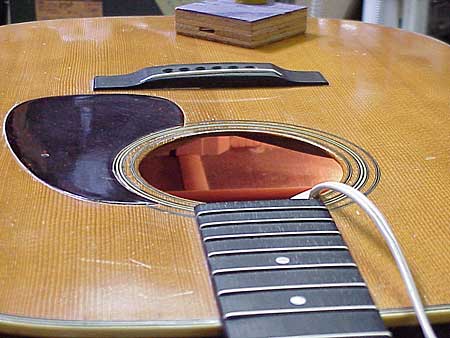
Here, you can see down inside the guitar, which I have clamped lightly right over the crack, bending it inward, opening the inside of the crack very slightly:
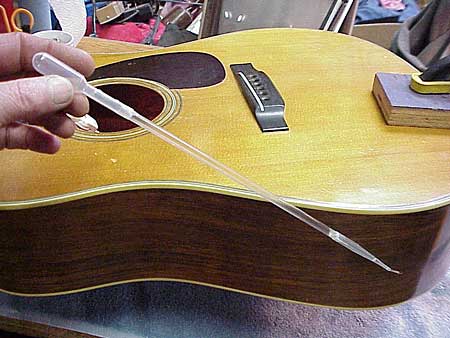
Delivering runny cyanoacrylate way down inside could be a messy procedure, so I've made a quickie extension for my regular disposable pipette:
With it, I can reach all the way down inside.
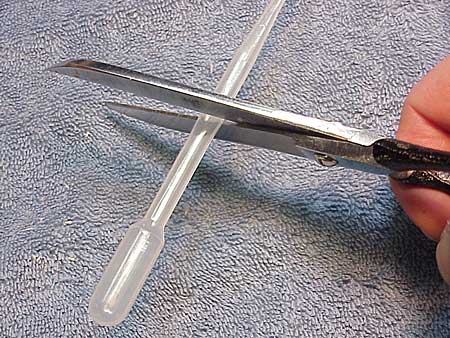
Here's how I made my extension:
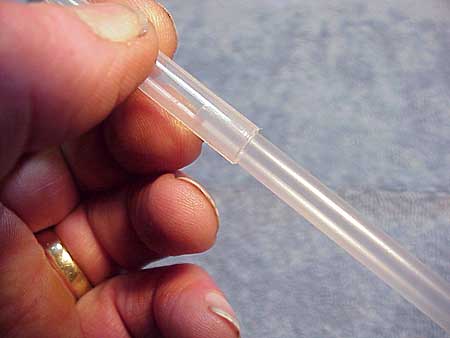
Pretty straightforward stuff. I simply jammed a soda straw into the cut ends of my pipette:
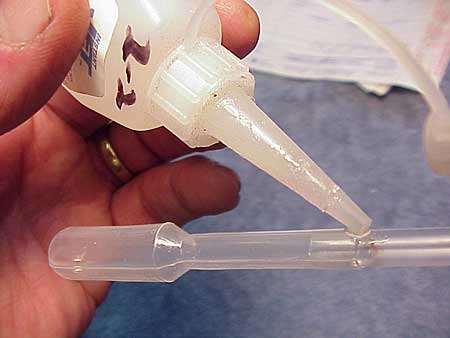
The straw didn't fit tightly enough to make a seal, so I used some cyanoacrylate and accelerated it with the spray catalyst:
This job is easy to see because it's a straight shot right down through the soundhole. I can bend my pipette to make it possible to reach other areas. I bend the straw section over the flame of an alcohol lamp, working very high off the flame. I particularly like the cheap, disposable nature of this little tool. Use it once, and chuck it. No tool cleanup at all!
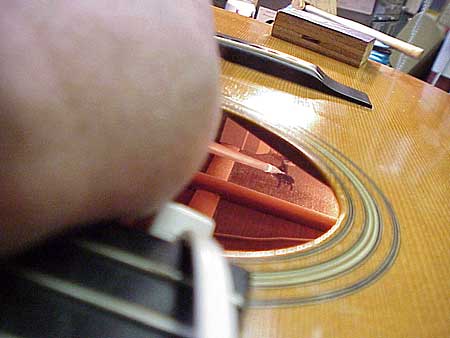
Now, it's relatively safe for me to dispense some thin cyanoacrylate right on the inside of the crack:
The thin viscosity glue runs easily into the opened crack. It doesn't run through to the outside, though, because the crack is so tight, and because I have it clamped downward, closing the very outside edge of the crack.
Now, all I have to do is clean up the excess glue after it sets.
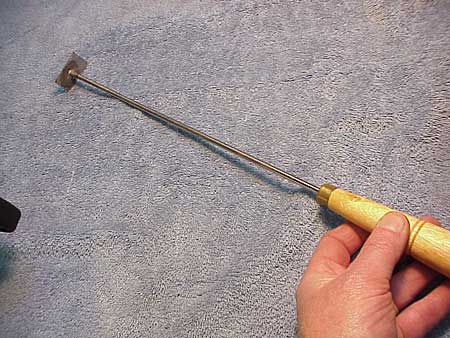
This is my long handled scraper for cleaning the inside of crack repairs:
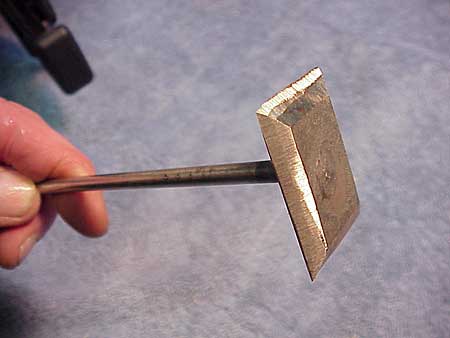
It's a 3/16" steel rod with a scraper welded on the end:
I ground the 1/8"thick piece of tool steel roughly to shape, and when it was still red hot from welding it on the rod, I quenched it in some water. I'm not particularly concerned with exactly how hard it turned out, because I can easily sharpen it each time I use it.
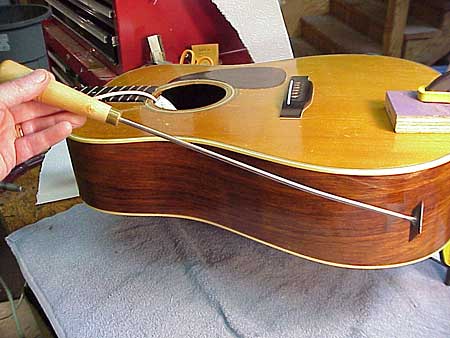
Mounted in a handle, the scraper is long enough to reach where I need it to go:
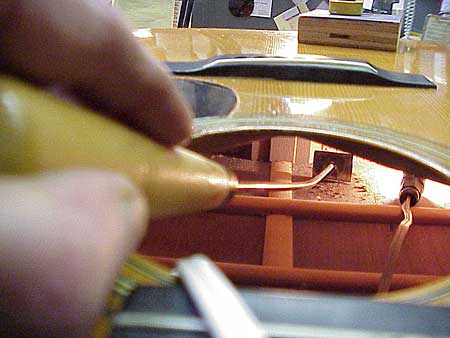
I simply bend the rod to adjust the scraper to the best angle, and with a few controlled strokes, I have the excess glue cleaned right off:
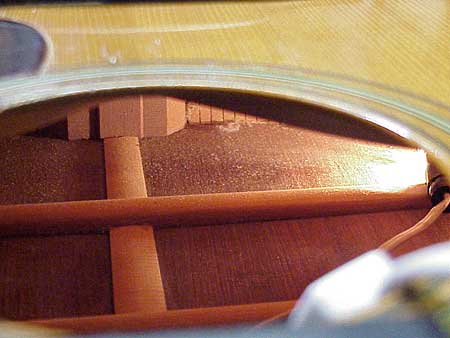
See? It looks pretty much the same as the untreated side:
This tight crack needs no internal reinforcement.