
Clean up your Axe
Not just guitars, of course
You can't play your guitar without touching it. And you can't touch it without getting it at least a little bit dirty. If you take a bit of time to do some "preventive" cleaning each time you play, you can avoid a number of future problems.
In this short article, I'll deal with the easy stuff first, and proceed to more drastic cleaning and polishing as I go along.
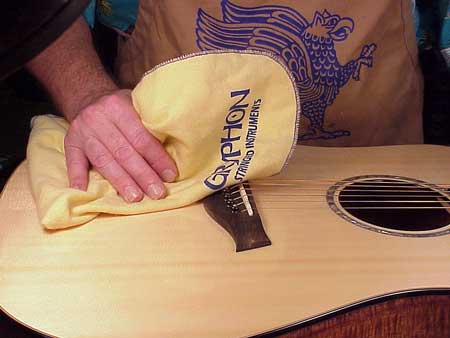
No doubt about it, a soft cotton cloth is the best for polishing and cleaning guitars. You can get a flannel "guitar polishing cloth" from your local music store and rest assured that it is safe to use on any instrument:
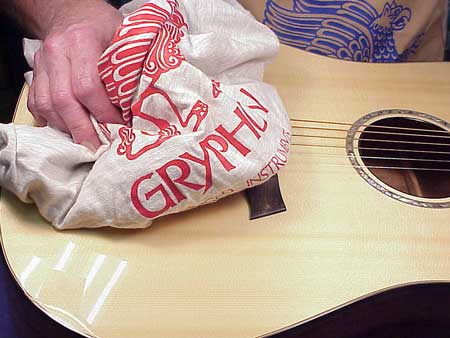
An old 100% cotton T-shirt makes a great guitar wiping tool, and the more it has been laundered the more free it is from lint:
Best to avoid wiping with the printed area of T-shirts. Some of the silkscreen paints are thick enough to scratch a delicate finish.
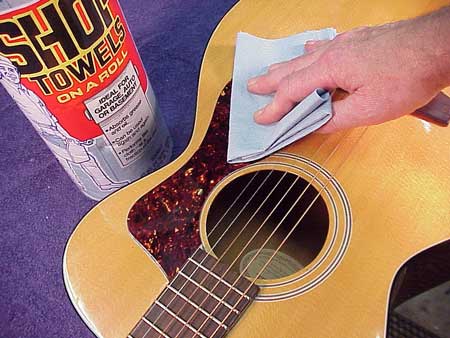
Paper towels can actually scratch a fine guitar's finish, especially if it's lacquer or shellac French polish. If you'd like to use a disposable cloth, then get the nonwoven "shop towels" that come on a roll or in a box. They cost about three times as much as paper towels, but they don't break down in water, and they won't scratch:
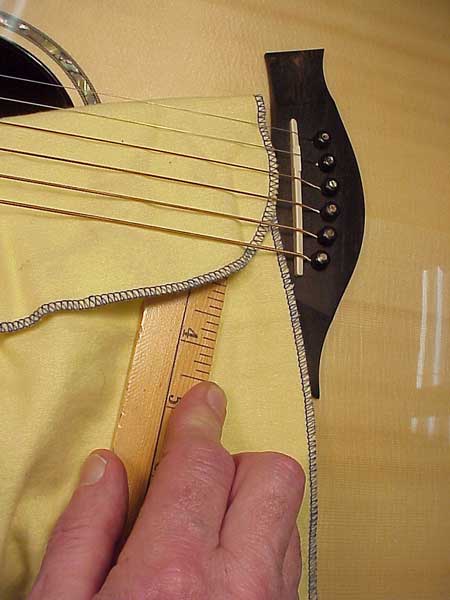
As you wipe down the entire guitar after each time you play it, you actually do a bit of polishing, too. In fact, simply wiping with a cotton cloth will keep a guitar looking like new. Some areas, such as the face under the strings, may seem a bit hard to reach, but it's not that difficult if you simply shove the wiping cloth under there to take off the surface dust.
I was recently contacted by Ken Goodman, a friendly guitarist who is actually in the industrial wiper business. If you'd like to talk specifics about this kind of product, give him a shout: GoodmanWiper.com
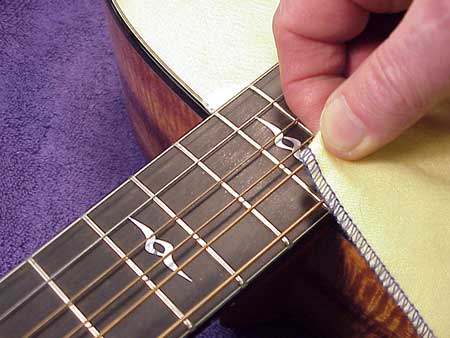
Speaking of strings, you can greatly extend the tonal life of strings by wiping vigorously each time you play. Some players even wipe their strings down from time to time during a playing session. Simply grip the string through the cloth, and scrub up and down the length of each string:
You can also keep the fingerboard relatively clean by wiping right over the board, strings and all.
As you wipe down the finish, particularly on the top and back, you may notice some spots or areas that don't come perfectly clean. Fingerprints, smudges, and other dirt may respond well to a trace of moisture. "Huff" some warm breath on the surface the way you would if you were about to wipe the inside of your car's windshield. Just that little bit of condensation may be enough moisture to allow you to wipe the offending area clean.
If your instrument seems to have a persistent "haze" on the surface of the finish, you'll probably need to use a lot of wiping cloths. Rewiping with a used cloth can deposit that contamination right back on the surface. So, if you're wiping down an instrument with a lot of surface haze, you'll need to keep using new cloths as you go. I've sometimes run through more than half a roll of those blue wipers doing a single guitar!
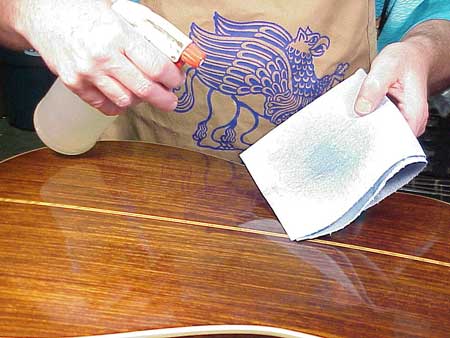
If you need a bit more cleaning power, try moistening the wiping cloth with a little mild detergent in water. Spray the cloth, not the guitar. That way you'll be able to control how much water actually gets on the surface. The idea is to use as little moisture as possible, to avoid it getting into any tiny voids in the finish:
Follow the damp wiping by buffing with a dry cloth to remove any streaks.
There are lots of commercial guitar polishes and cleaners on the market. They are basically of three types - water based cleaners, creamy, water based cleaners with very fine abrasives, and oils. Most of these are fine products, and, used according to directions, will give good results.
Oils will remove oily smudges, but may not have any effect on water soluble dirt. Water-based cleaners (which look semitransparent in the bottle) should be sprayed on the cloth rather than on the instrument, and will clean up water soluble dirt best. The creamy polishes may have a slight abrasive, and are best avoided if you have a "matte" or dull finished guitar. Too much polishing can cause a semi-gloss finish to become shiny in patches.
Well, so much for the easy stuff! How about guitars that are old, or have more serious grunge, or damaged finishes? Some cleaning and polishing problems are best left to professionals, and some finishes are so damaged that there's nothing to be done.
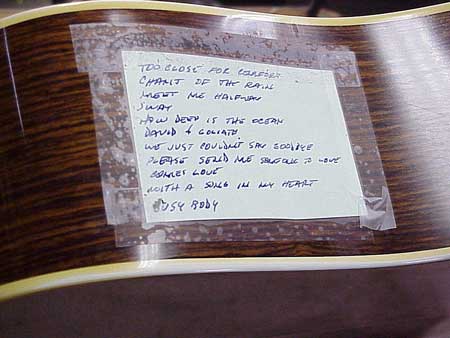
Tape, stickers and some self-adhesive accessories may leave a sticky residue behind when you remove them:
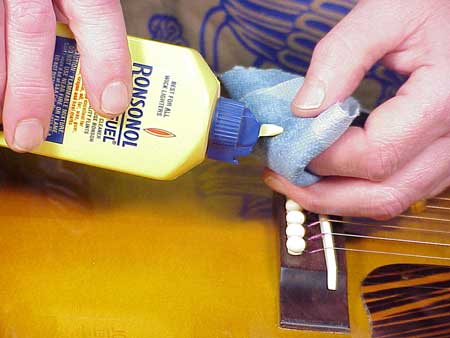
Most of the time, water and guitar polish are ineffective in removing this kind of goo. Mineral spirits or naphtha (lighter fluid) won't injure the finish, and will usually dissolve the sticky residue:
Apply the solvent with a disposable cloth, and turn the cloth often to avoid smearing the adhesive around the finish. A light buffing with a damp cloth should take care of any solvent streaks left behind.
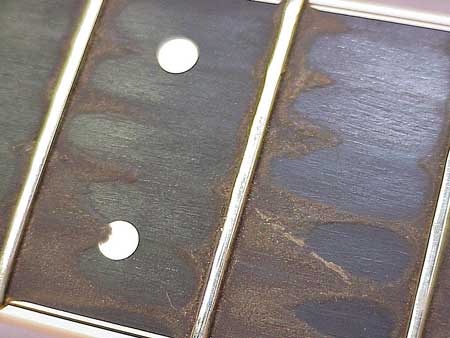
As you play your guitar oils from your hands, and other dirt gets mashed onto the fingerboard. In fact, the fingerboard is the dirtiest part of most guitars:
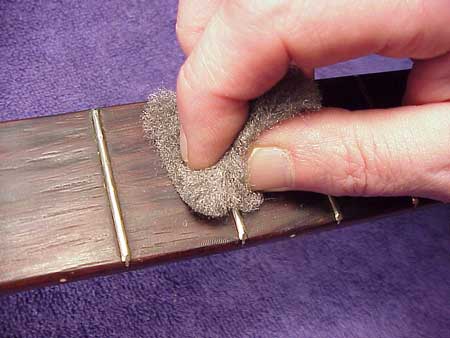
When you're changing strings, you have an opportunity to wipe down the fingerboard and really clean things up. (By the way, it doesn't hurt any guitar to take all the strings off at the same time.) If the dirt buildup is really bad, simply wiping with a damp cloth won't suffice. Get some extra fine steel wool (grade #0000) and scrub the fingerboard gently across its surface, parallel to the frets:
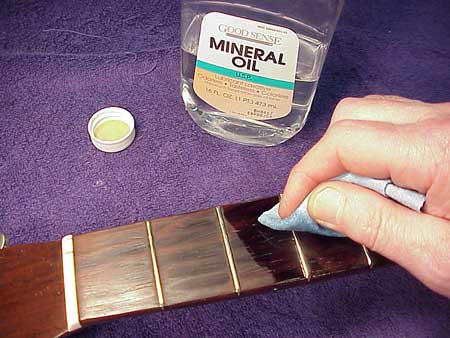
As you scrub, make sure you don't snag the ends of the frets! There's usually no need for cleaning agents, because the steel wool will scrape the dirt away. Some players talk of "feeding" the unfinished surface of the fingerboard with oil. Fingerboards are not actually hungry and don't really need to be fed, but a light coating of oil gives them a finished and clean look. If you do choose to oil the fingerboard, do it with care. Use a tiny amount of lemon oil or mineral oil on the rag, wipe it on the fingerboard, and then wipe it all off. You don't want to saturate the fingerboard, and you don't want a lot of oil running down into the fret slots. If there are cracks in your fingerboard, consider having them filled professionally, and don't get oil in the cracks. Generally, you'll want to stay away from linseed and other natural vegetable oils, which become sticky and gummy over time:
This kind of fingerboard cleaning should be a once-a-year event, at the most. Too much scrubbing and oiling can easily do more damage than good.
Lemon oil and other oils are often sold as instrument polish. None of these will injure any finish, and can be used without fear of damaging the finish itself. The oil type cleaners will tend to remove oil soluble dirt, BUT, it is very important to realize that oils and polishes can penetrate any little breaks in the finish, and may make quite a mess over time.
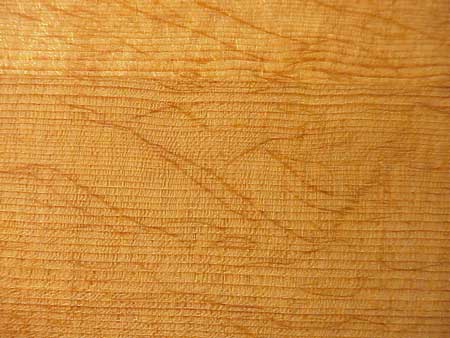
A guitar with cracks or a "crazed" finish, should be approached with utmost caution. Oily polishes will leach right through the cracks in the finish and stain the surface of the wood, and the stains will "bleed" and become more ugly as the years go by:
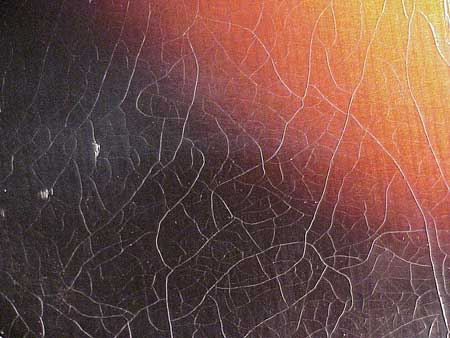
The creamy white commercial guitar polishes will leave a high shine, and will clean a new finish beautifully. But an old, crazed finish will absorb the polish and will look like an old dried riverbed with white outlined cracks:
Some creamy polishes have a tendency to build up on the surface, leaving a film behind. This film may look shiny and clean, but it may actually be somewhat likely to water-spot and collect dirt. So, it is possible to build up a waxy finish coating that in itself requires more maintenance than the finish underneath. If you have a problem with one brand of creamy polish, try cleaning it off with the light detergent and water on a cloth, then switching to another brand.
Very light surface scratches may often be "rubbed out" by hand, using a variety of automotive and plastic polishing compounds. For recommendations about this sort of polish, see your local professional luthier.
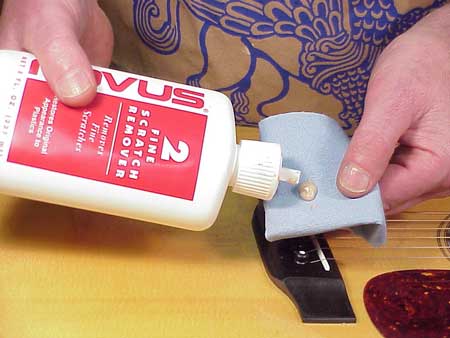
I'm particularly fond of Novus #2 plastic polish. It leaves a high gloss without a serious residue:
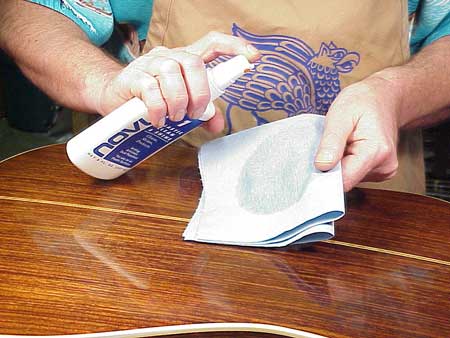
Follow the #2 with the #1 spray to leave a static-free clean surface
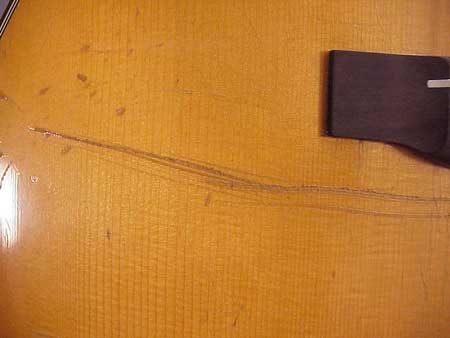
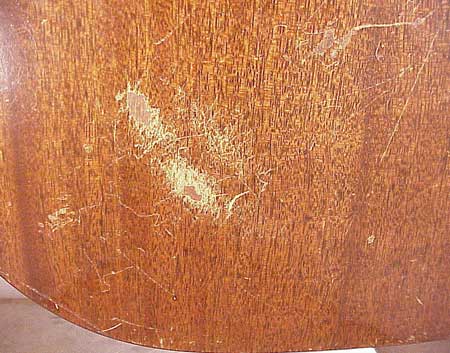
Deep scratches, scars, and other breaks in the finish tend to attract dirt like magnets. Polishing, either with water or oily cleaners, will simply rub the dirt right into the scratches:
Modern instruments may be finished with a catalyzed polymer coating that is quite inert and unaffected by perspiration and skin oils. Nitrocellulose lacquer is much more reactive, however, and needs a bit of understanding to avoid difficulties in cleaning or polishing.
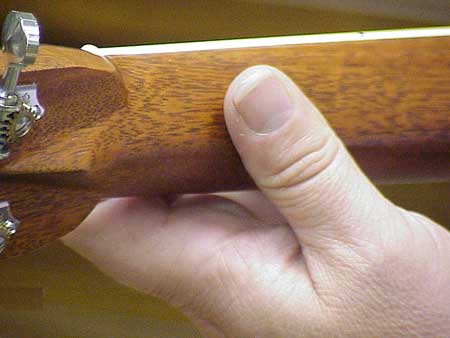
The finish on the back of the neck gets the most handling of all. As it is handled, the lacquer may react to your skin chemistry and become soft, increasing the rate at which it wears:
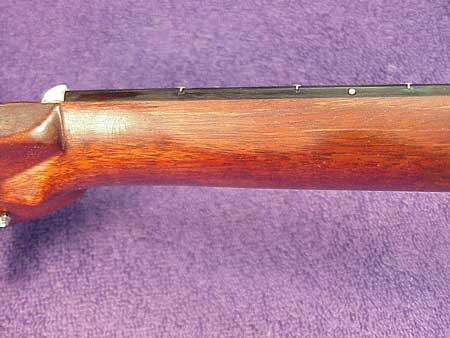
After enough "mileage" the simple act of playing a guitar will wear the finish off in the areas that are handled the most:
It goes without saying that you can't clean the finish if it's worn off!
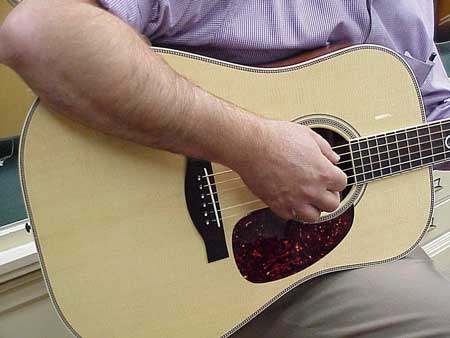
The area of the top where you rest your forearm is particularly vulnerable to becoming softened as it reacts to your body chemistry:
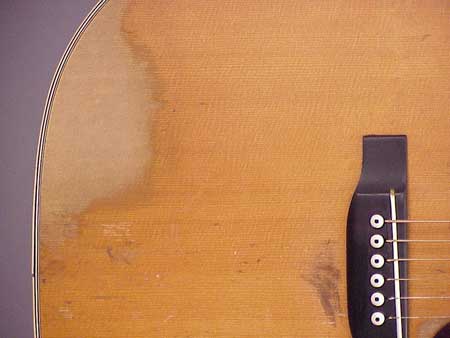
Like the neck finish, it wears prematurely when it becomes soft, and it may eventually look like this:
Now, these are extreme examples of long term wear, for sure. But, the softening of the finish may be noticeable even when a lacquer finished guitar is quite young. If you notice a dull area where your arm crosses the face, don't be to eager to try to polish it vigorously. You may have a slightly softened finish, and it would be a good idea to take it to a professional luthier for some advice.
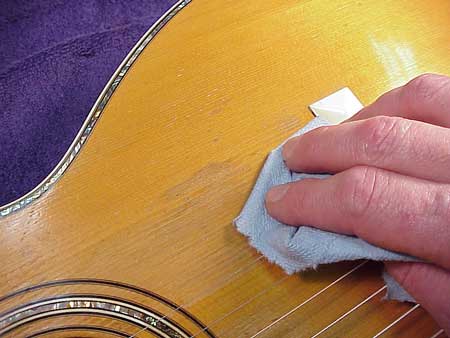
Areas with broken finish are best left alone. Rather than using polishes or solvents, simply wiping with a dry cloth is about the best you can do to maintain these areas: