
Recycle Page
I'm not exactly a fiend for recycling, but there are a few little items I like to reuse in different ways.
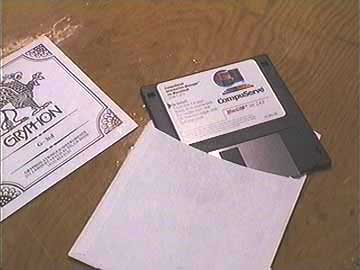
Here's a good use for those old string envelopes:
I reuse those junk mail diskettes, too.
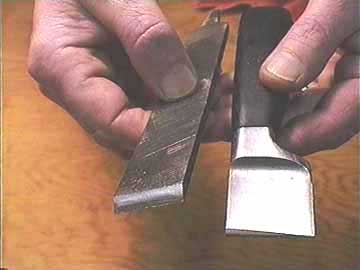
I save old files to grind into stout scrapers:
This big broken kitchen knife makes a super heavy duty scraper that's perfect for cleaning up the bottoms of guitar bridges for regluing.
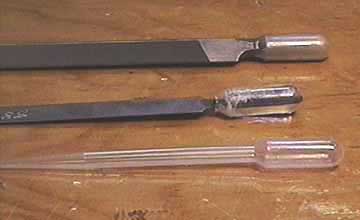
I use the West System epoxy with the small dispenser pumps. Using the pumps, the smallest amount I can mix up is about one ounce. I can use the leftover epoxy for filling holes in my bench, coating clamp cauls and for a variety of other quick jobs. I'll clip the bulb off a used disposable pipette, pour it full of epoxy and stick a file tang into it. That gives my little fret file a swell little handle:
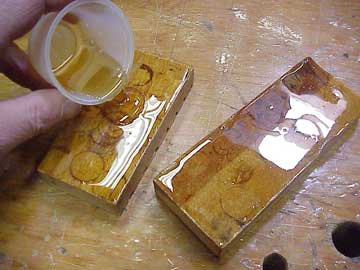
After each job, I look around quickly to find some place to dump that extra epoxy. If it's not a quick fill in the bench top, it's a coating on the back of clamping cauls:
It's amazing how much longer my old cauls have lasted since I poured leftover epoxy on them.
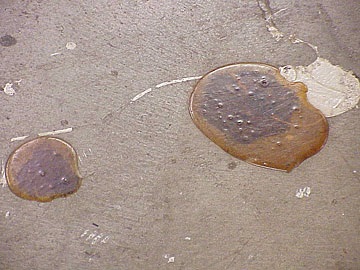
If I don't have a tool, fixture or caul that needs epoxy, I'll fill holes in the concrete shop floor:
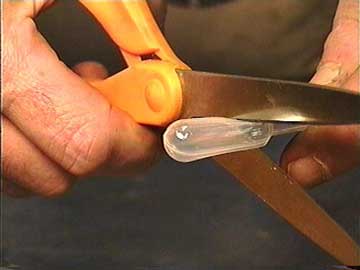
Here's another way I reuse those disposable pipettes:
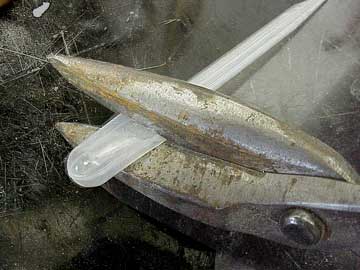
I just snip off the bulb:
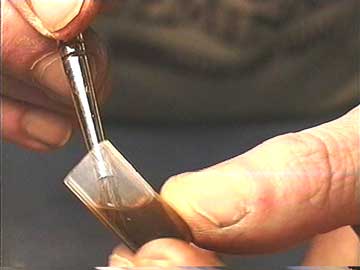
and I have an instant teeny little container for washing out my artist brushes:
That way I don't have to waste a lot of solvent. I just clip off the bulbs before I throw out the used pipette and toss them in the drawer with my brushes.
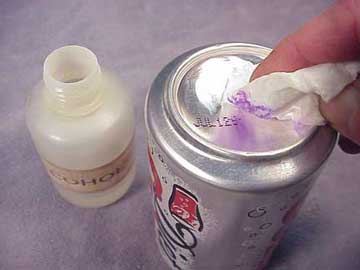
This recycle tip hardly needs any words at all!
Don't forget to remove the age-date.
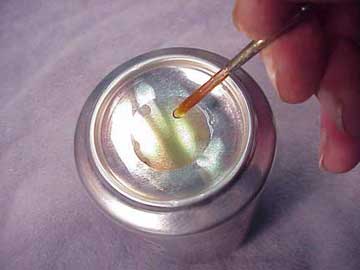
A great simple, disposable mixing and dispensing.
open!
Yet Another use for pipette bulbs:
Somehow, I'm always losing the little cap that comes with the tube of exterior caulk. If I don't actually lose the cap, it doesn't fit because of the way I've cut the spout. While painting my garage in the summer of '99, I needed to cap off my caulking gun for a few days, so I tried this little trick.
Snip the bulb:
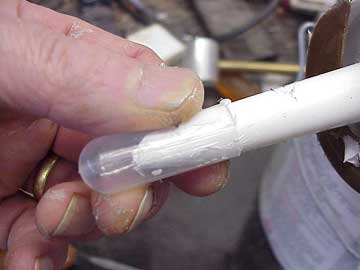
Hold it over the nose of the caulk tube:
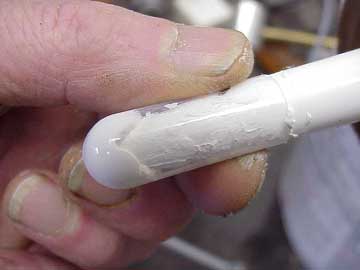
Pump the bulb full of caulk:
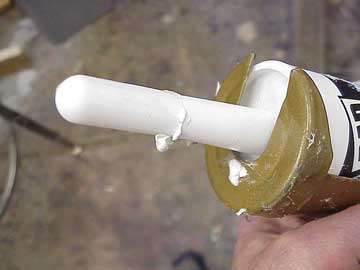
Then, after releasing the plunger, the new "cap" won't squirt off:
After a week, the caulk was fresh as new. I don't know for sure, but I think this method traps more solvent so the caulk stays fresh longer than it would with the original cap.
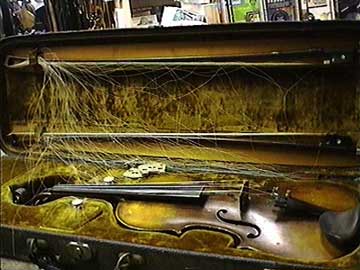
Here's one I found in an old violin case:
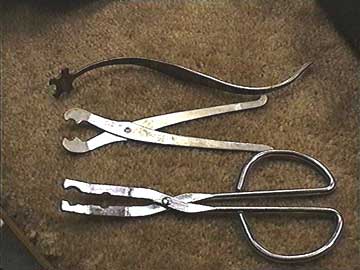
The professional violinist who owned this instrument did some of his own setup work. He either didn't have, or didn't like either of the two traditional violin soundpost setting tools at the top of this picture:
He made his own very effective soundpost setter from a regular pair of kitchen tongs! Very clever, and a good reminder that it pays to keep your eyes and mind open!
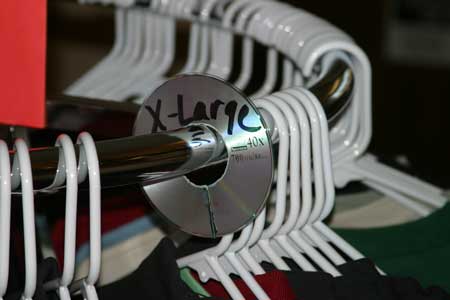
For Gryphon's T-shirt display rack, our office manager, Nancy, came up with this bit of CD-ROM recycling: