
Ted Megas
The "old shop" of Ted Megas
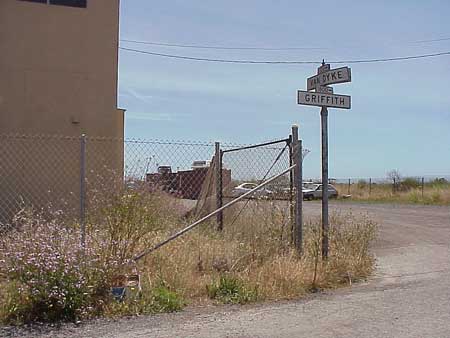
Ted's shop is at a, well, er, low traffic intersection in San Francisco:
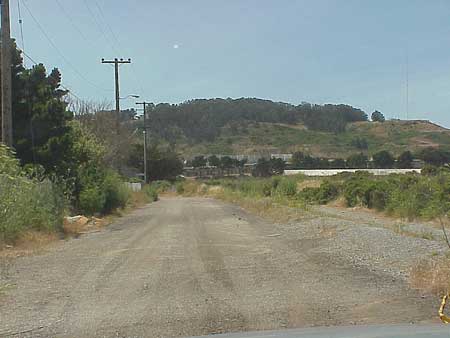
In fact, it's more of a no traffic intersection:
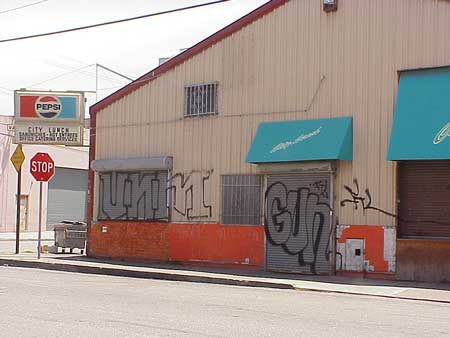
Right down the street is the City Lunch:
OK, so it's not a high class neighborhood.
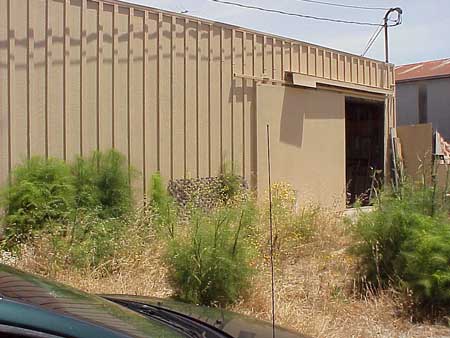
That's why his front entrance is what you might call "low key"

Looking out from his front door, you can see Candlestick Park:
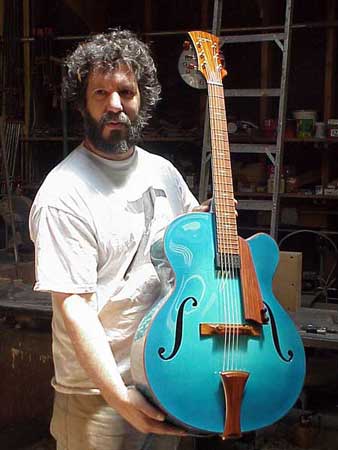
Inside, you can see Ted Megas, with his latest creation:
It's a blue archtop guitar, similar to the one he made for the Chinery Collection.
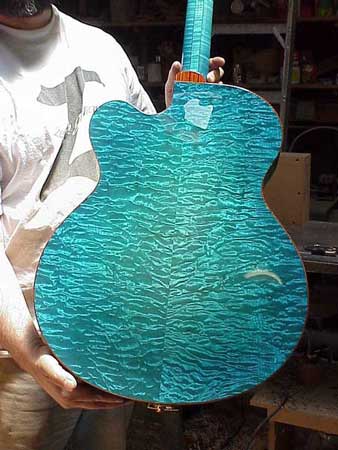
Wow! Just look at that quilted maple:
Later, I'll clue you into Ted's secret for finding wood of this quality.
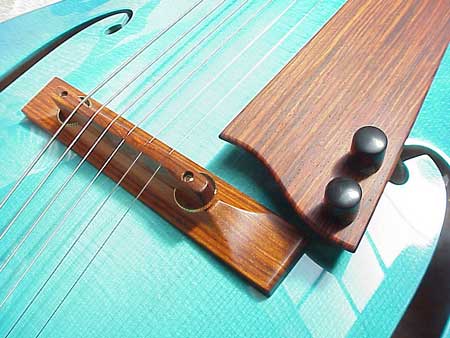
The cocobolo fittings really set off the colored finish:
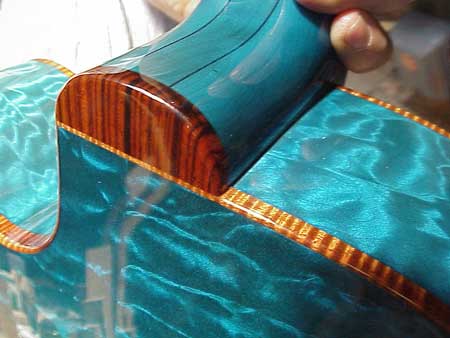
The figured koa binding really pairs up well also:
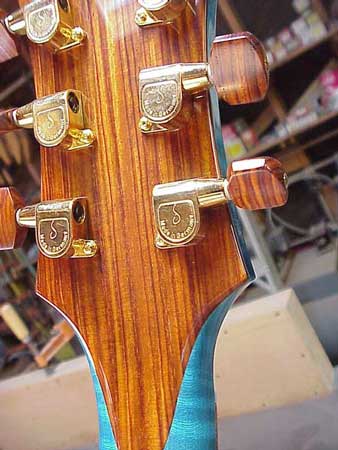
Ted even makes his own tuner buttons to match:
In fact, he makes most everything himself, including many of his specialized tools. He told me that he had difficulty in obtaining truly quartersawn ebony fingerboards; he buys heavy billets of ebony so he can resaw them himself.
Unfortunately, Ted is just getting ready to move his shop, so there are no instruments in progress as we go through his collection of tools and setups.
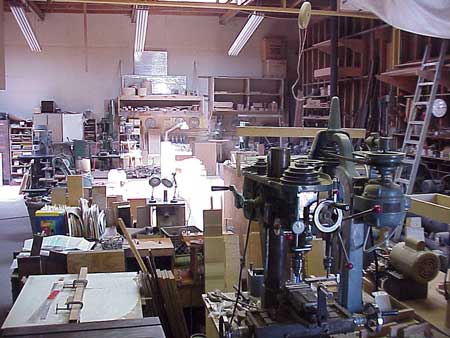
Ted's shop is a big place, jammed with all manner of power tool:
He says it's often much cheaper and easier to buy and modify a tool for a special purpose, rather than to design and build the tool from scratch.
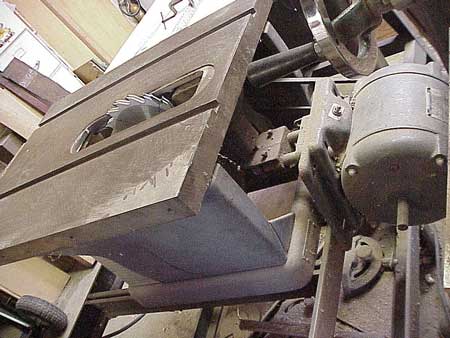
Here's a simple example. It's an old table saw with a dado blade:
He uses this tool only for cutting the notch at the intersection of the top braces.
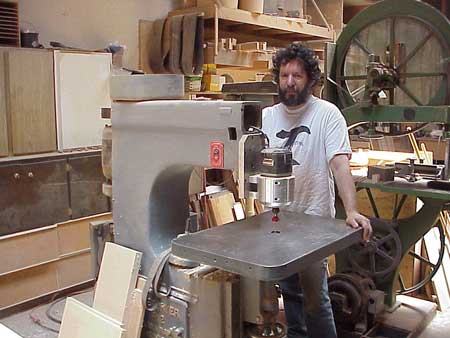
Ted shows off a simple modification of a big industrial tool:
He bought this huge old pin router, but found that it vibrated too much at high speed. So he simply replaced the machine's head with a modern router. Now he has a heavy duty router mounted in a totally vibration-free environment. With this unit, he can duplicate parts with incredible accuracy.
Check out the old bandsaw behind him.
The whole shop is a feast of tool modifications, setups and cool ideas.
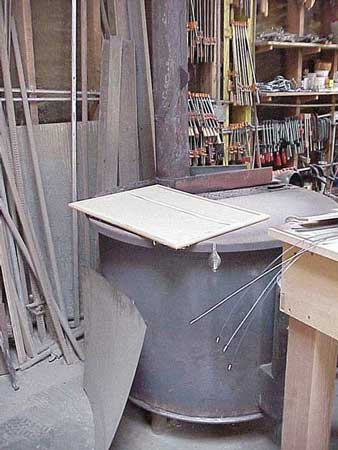
On cold days, he fires up this old wood stove:
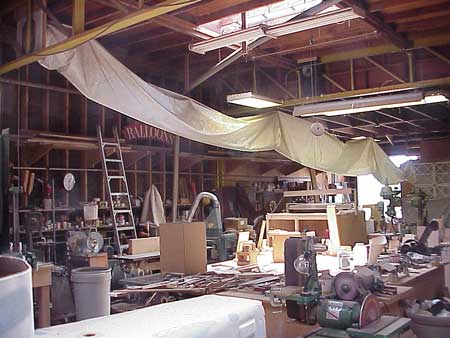
It heats the big room reasonably, but look up above there:
At the upper left, there's a box fan mounted near the ceiling above the heater. The fan blows hot air into that long serpentine cloth tube draped the length of the shop.
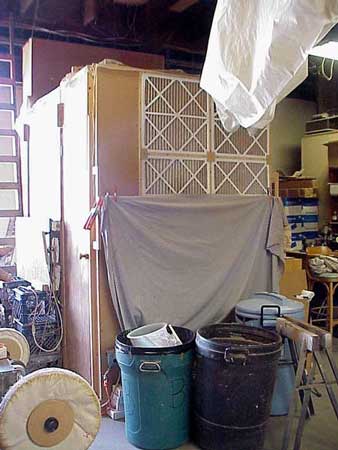
Dry, heated air is delivered right to the air intake of his spray booth:
Simple, and so efficient.
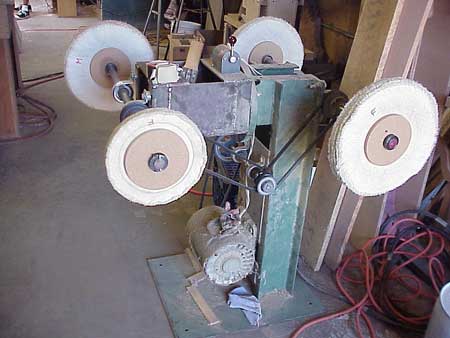
Ted does his own welding, and made up this four station buffer:
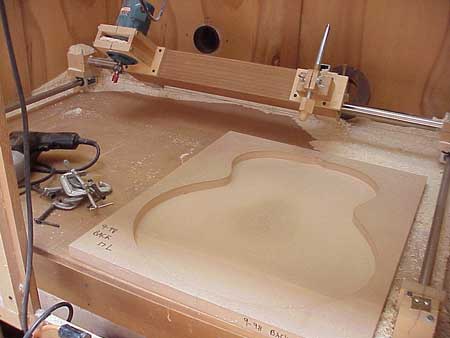
Top and back construction begins with his pantograph carver:
It's a tool Ted designed and built after trying out and being dissatisfied with a commercial unit.
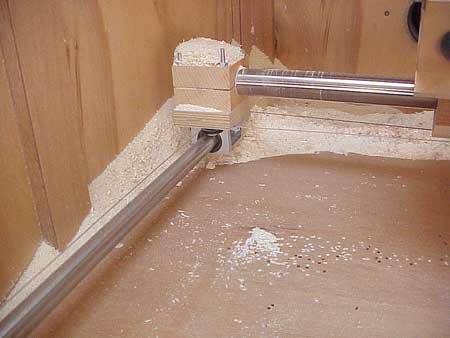
He has tensioned cables which keep the linear bearings aligned:
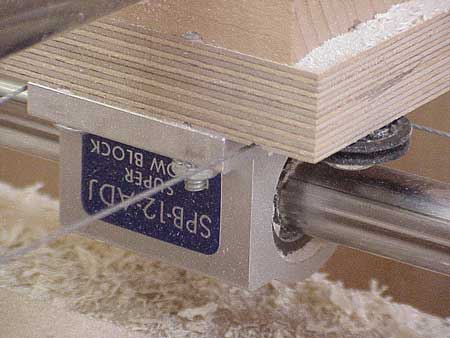
The idea for the cables came from those old drafting machines, with its self-aligning squares and rules.
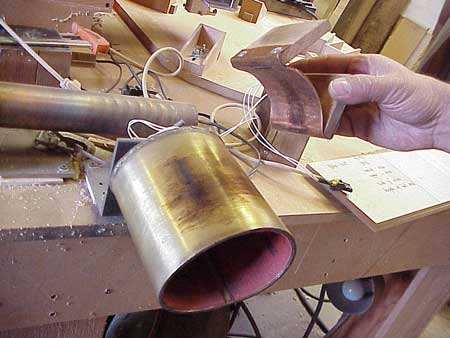
Ted bends the maple sides over a heated tube, for which he has made a mating heated caul to smooth out the process:
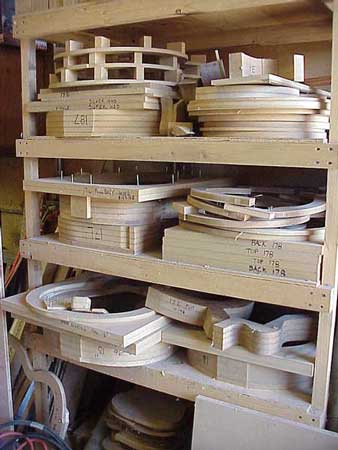
The requisite stack of molds, forms and templates:
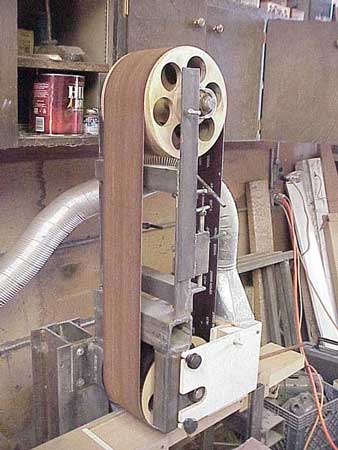
This is Ted's shop-built thicknessing sander:
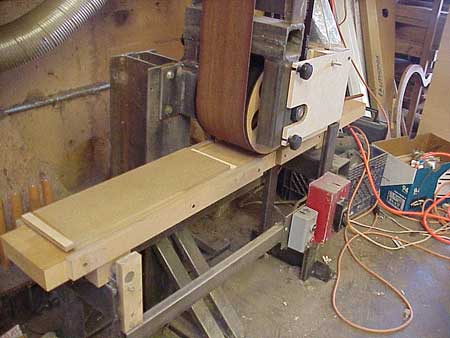
Sides go under the lower drum, carried along on a board:
The belt runs much cooler than a drum sander.
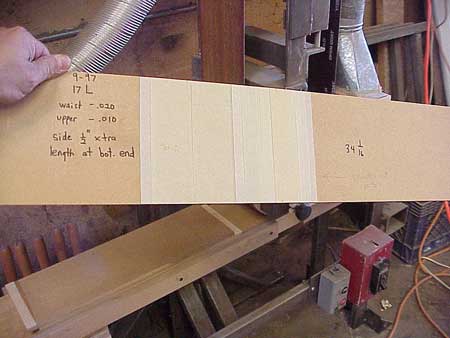
He has different boards for each model and side:
Here you can see the built-up area (its really just layered masking tape) so the side gets sanded a bit thinner in the area of the cutaway, for easier bending.
OK, here comes a really cool setup:
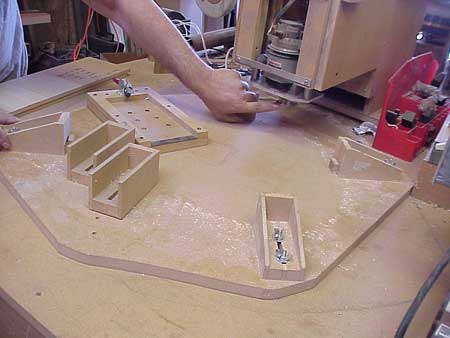
Ted has a router counterweighted and mounted on a track so it slides up and down effortlessly for routing the binding channel around the top and back of the guitar body:
The body is held in in place on the moveable work board, which rides friction-free on a cushion of compressed air.
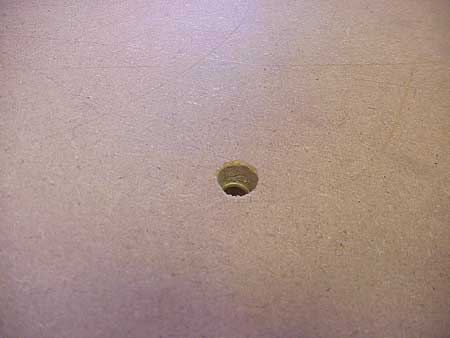
I lifted the board off to reveal a single air hole in the table beneath:
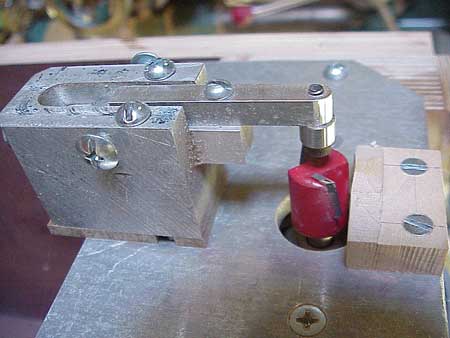
Here's a close-up of the cutter head:
Very straightforward stuff. An adjustable guide bearing and a contoured depth stop which rides along the top edge of the guitar.
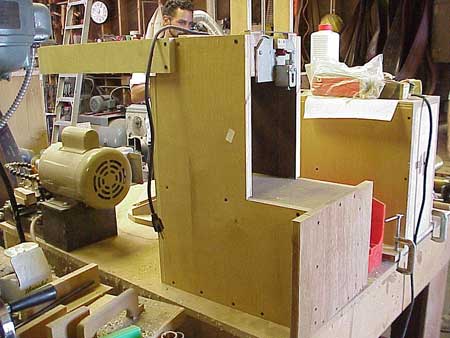
At the other end of that same large table is a complete spare router head, lying on its back"
Instead of changing the setup for tops and backs, he simply replaces the entire head assembly, router and all. Then, setup time is almost eliminated.
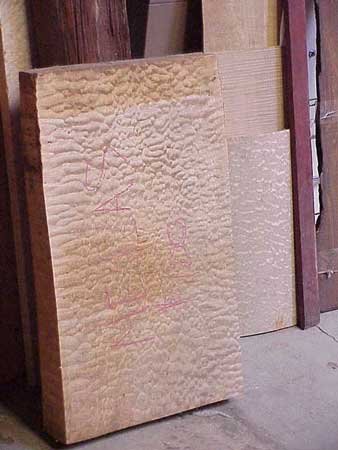
Ted really insists on doing all phases of construction himself, and buys his wood in lumber form whenever he can.
OK, here's Ted's advice for those who want wood that looks this good. He claims you actually need to go to where the stuff is cut and deal directly with the lumbermen. He travels to Oregon frequently to get this bigleaf maple. In fact, that's one of the reasons he's relocating his shop to the Portland area in just a few weeks. ( I told him I was planning to be ill, or out of the area when it came time to load up all those tools!)
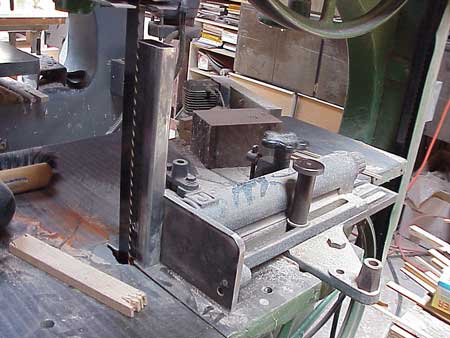
Ted's big old bandsaw stands at the ready when it's resawing time:
He salvaged parts from another big old tool to make this simple but sturdy resaw fence.
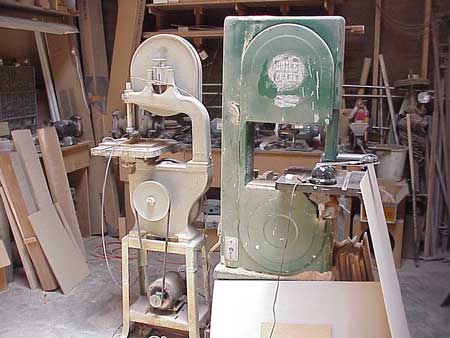
Nothing like redundancy when you can turn it to your advantage. Besides the big resawing bandsaw, Ted has a metal cutting bandsaw for tooling, and a general woodworking bandsaw:
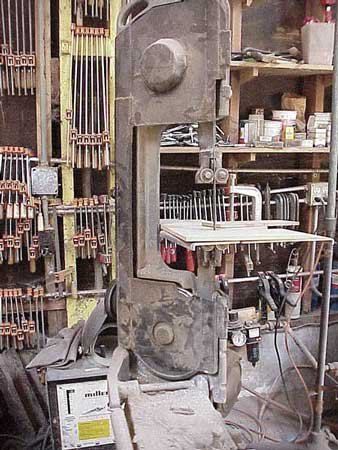
Ted makes his own tailpieces, too, so (naturally) he has this fourth bandsaw just for cutting brass:
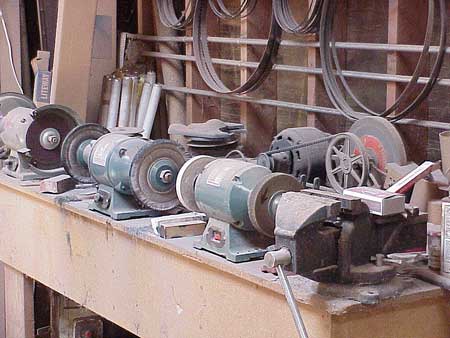
I have a grinder in my shop. Ted has four:
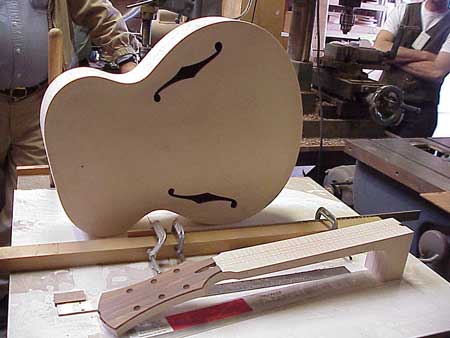
Ooh! What's this?
It's a guitar in progress for none other than fellow guitar maker, Jeff Traugott!
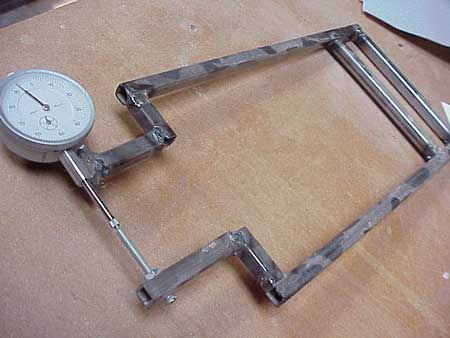
Ted welded up his own thickness gauge:
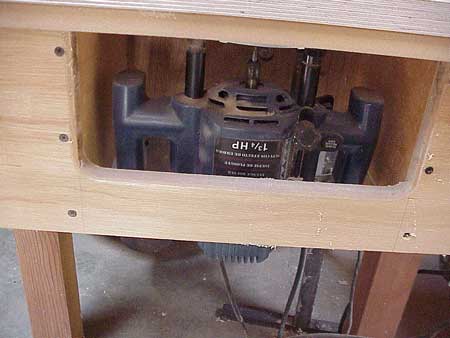
A router hides under a counter top:
It gets raised up to see duty making the tuner buttons, tailpieces, and fingerrests.
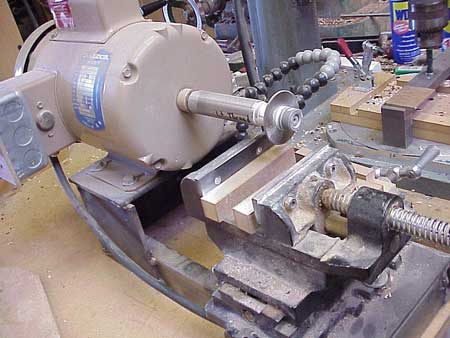
I had to ask about this one. Ted uses the "diagonal split block inlay" style. Instead of cutting each triangular piece out and inlaying them separately. Ted takes a rectangular block of pearl, and cuts a slot almost all the way through it on a diagonal with this machine:
Then he inlays the block with an ebony strip, and inlays the resulting rectangular block in one piece.
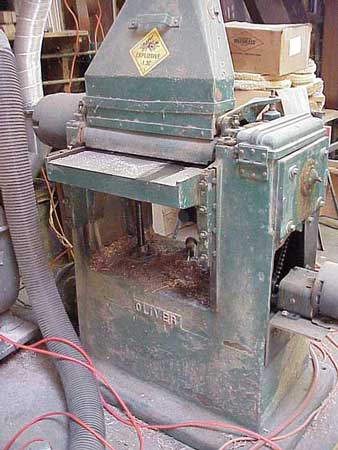
In order to plane the figured woods, Ted fitted his Oliver planer with a separate gear motor to control the feed:
You can see the motor and gear drive hanging off the right side. He claims he can slow the feed down to about a foot a minute if he wants to plane figured maple with no tearout.
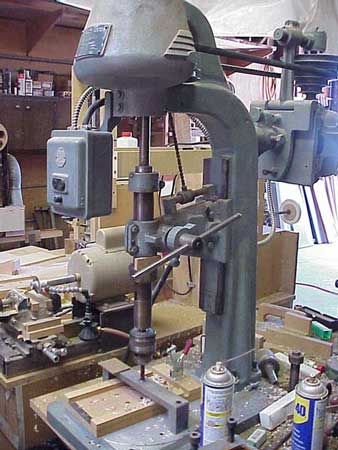
An old boring machine fitted up for drilling pegheads:
I don't think I've ever visited an individual luthier who employs as many tools as Ted Megas! His ingenuity shows in every corner of his large shop. With his attention to detail in tooling, it's no wonder his instruments come out looking (and sounding) so fine!